The Evidence-Based Guide to Low Testosterone
A guide to what works, what doesn't, and what the research shows about declining levels


If you spend time on social media, you have probably seen the claims: testosterone levels are crashing, an entire generation of men is being feminized, and the solution is a supplement, injection, or subscription promoted by someone with a discount code.
I have seen the fallout firsthand. Men convinced their fatigue must be “low T.” Men already on testosterone from an online platform without ever having a proper workup. Men with normal levels being sold a hormone they may stay on for years.
But I have also seen the other side: men with genuinely low testosterone whose lives meaningfully improved once they were properly diagnosed and treated under close medical supervision.
The reality is more nuanced than either camp would have you believe. Testosterone is not a scam, but it is not a shortcut every tired man needs. So I went deep into the research to answer the questions I get asked most: Are testosterone levels actually declining? Does it matter? And what can you actually do about it?
Quick primer: Testosterone is the primary male sex hormone, produced by the testes in response to signals from the pituitary gland. It plays a central role in:
Sexual development and function
Muscle mass and strength
Bone density
Red blood cell production
Body composition
Mood and energy

Production peaks in the early morning, declines throughout the day, and gradually decreases with age at a rate that varies depending on genetics, body composition, and overall health.
Are Testosterone Levels Really Declining?
Maybe, but the story is more complicated than social media would have you believe.
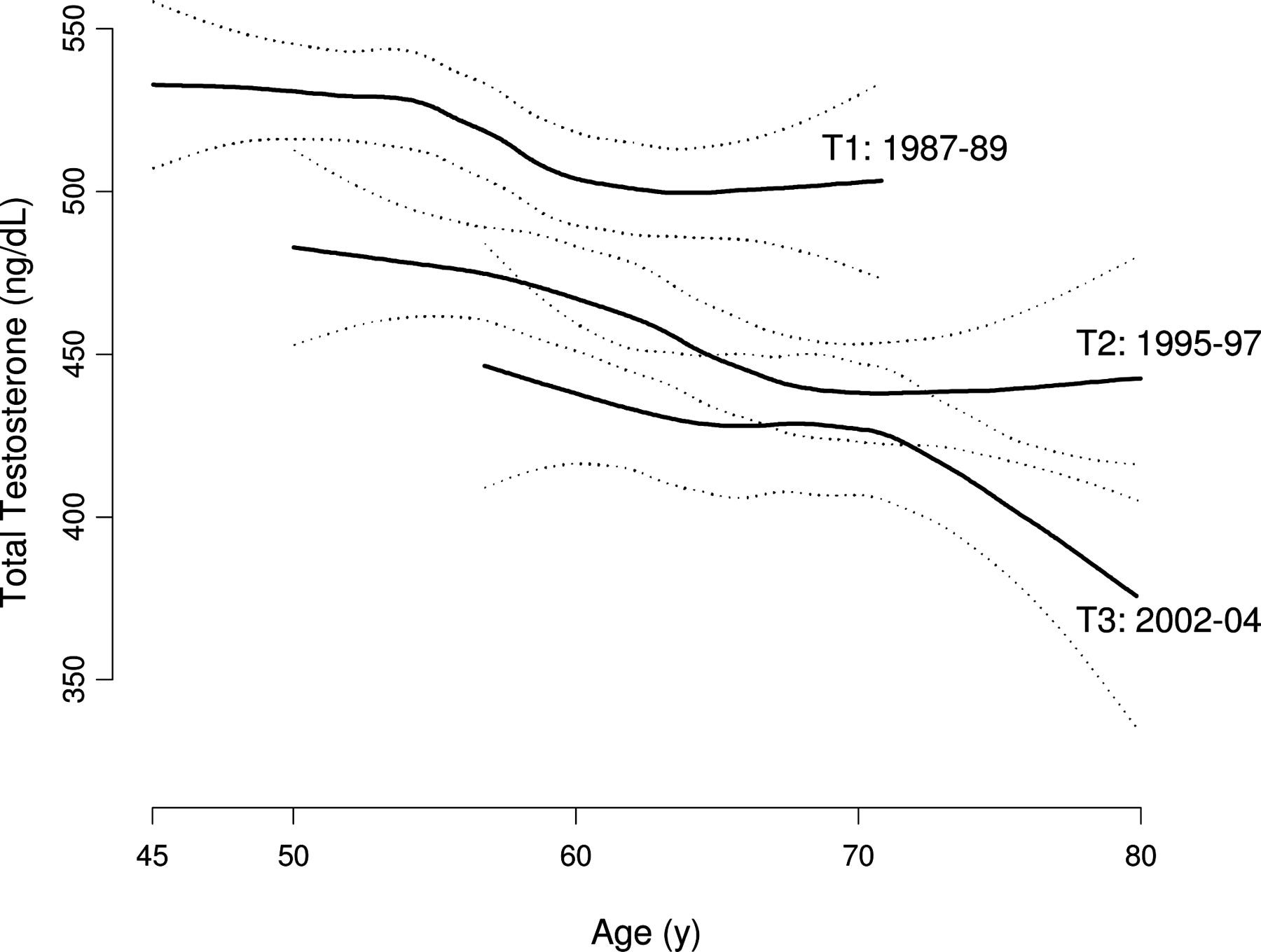
In a landmark US cohort study, researchers tracked men across three waves from 1987 to 2004 and found a ~1% per year decline in total testosterone independent of age, obesity, or smoking. In age-matched comparisons, a man measured in the early 2000s had testosterone about 10% lower than a similar-aged man in the late 1980s. International studies have replicated this finding, with one Israeli study confirming the trend in over 102,000 men within a single healthcare system.
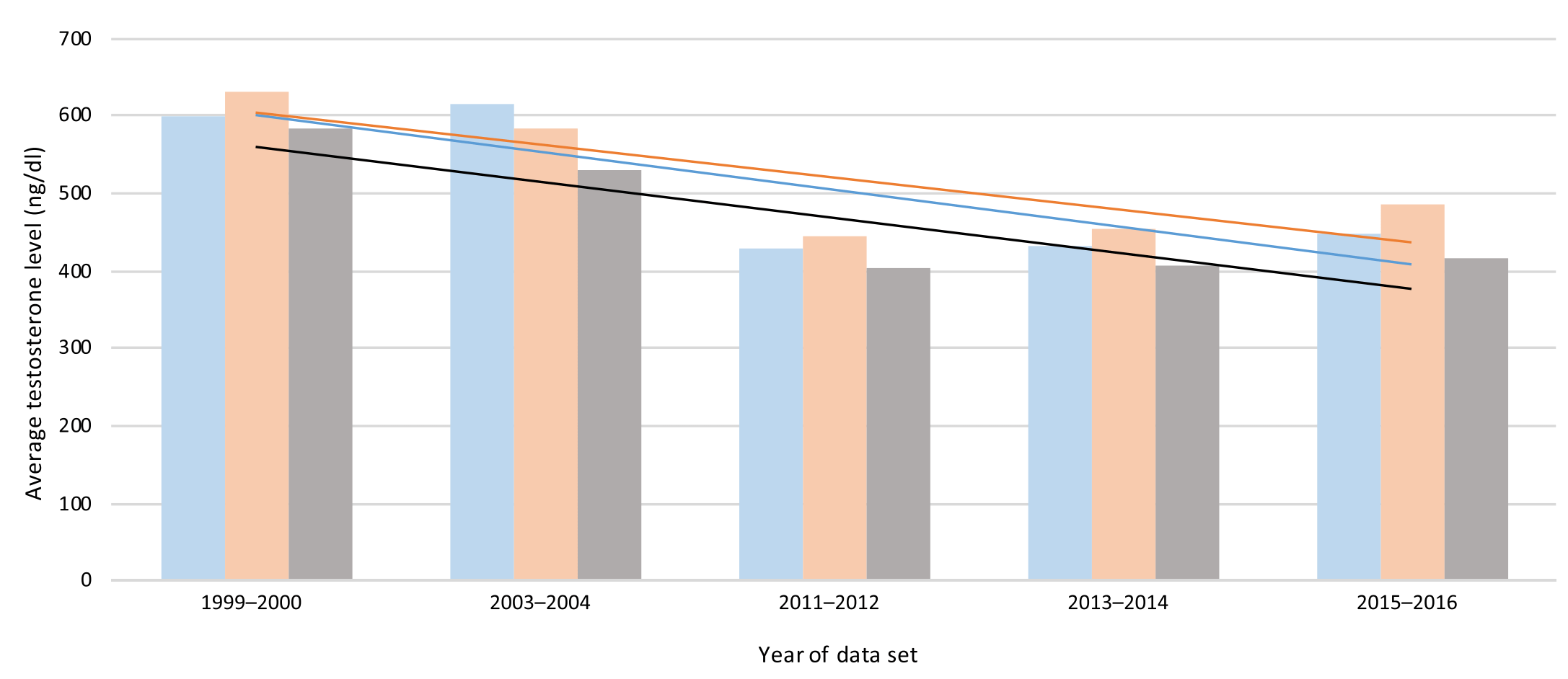
NHANES data (1999 to 2016) showed lower mean testosterone in later survey cycles among males aged 15 to 39, even after adjusting for BMI. And a 2025 systematic review of over one million men (1971 to 2024) confirmed the global trend, with a key finding: luteinizing hormone (the brain’s signal telling the testes to produce testosterone) is also declining. This points toward something happening at the level of the brain, not just the testes, and cannot be explained by rising obesity rates alone.
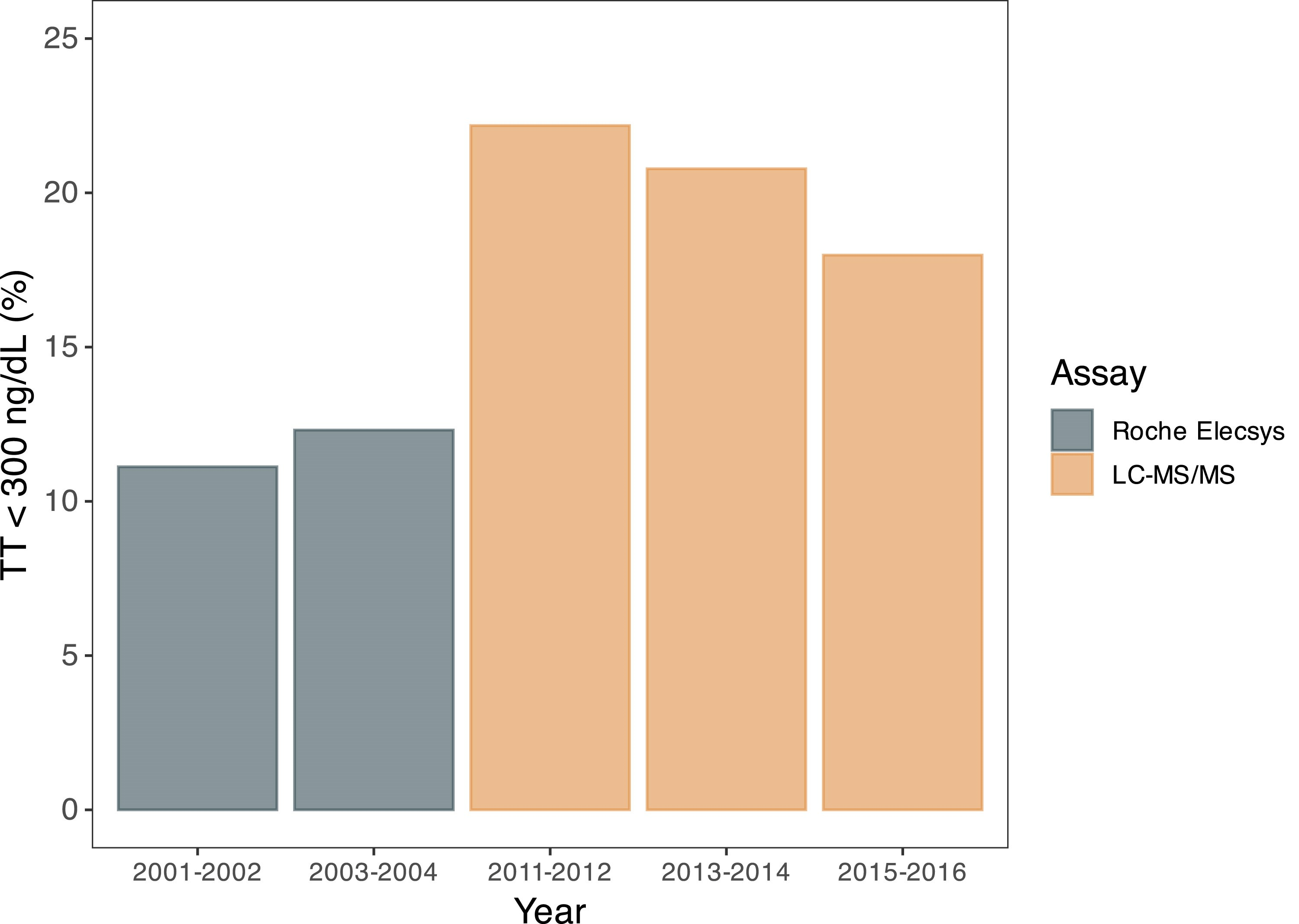
But here is where it gets interesting. A 2025 paper in Clinical Chemistry from a Yale research group identified a critical methodological concern with previous data. Between the 2003 to 2004 and 2011 to 2012 survey cycles, NHANES switched from the Roche Elecsys immunoassay to LC-MS/MS (liquid chromatography-tandem mass spectrometry). This is the gold-standard method, but it tends to read lower at the low end of the testosterone range compared to older immunoassays. The widely cited 300 ng/dL diagnostic threshold was originally derived using immunoassay data.
Here is what this means in practice: the percentage of healthy adult men with testosterone below 300 ng/dL appeared to nearly double, from about 12% to 22%, over a decade. But when they applied a lower cutoff of 264 ng/dL (which was specifically developed for modern LC-MS/MS assays), prevalence returned to approximately 11 to 14%, effectively eliminating most of the apparent increase.
Does this mean the decline is fake? Not necessarily. Even in past studies when researchers have held assay methodology constant, testosterone levels still seemed to decline even after accounting for age and body weight.
The bottom line: Testosterone decline appears real, but its magnitude may be overstated, amplified but not completely explained by rising obesity.
What Is Driving the Decline and the Conversation
Rising obesity is a major documented contributor: aromatase in fat increases testosterone-to-estradiol conversion, while adipose-related inflammation and metabolic signals are linked to suppressed gonadotropin output and reduced testicular steroidogenesis, creating a bidirectional cycle where weight gain lowers testosterone and low testosterone can favor further fat gain.

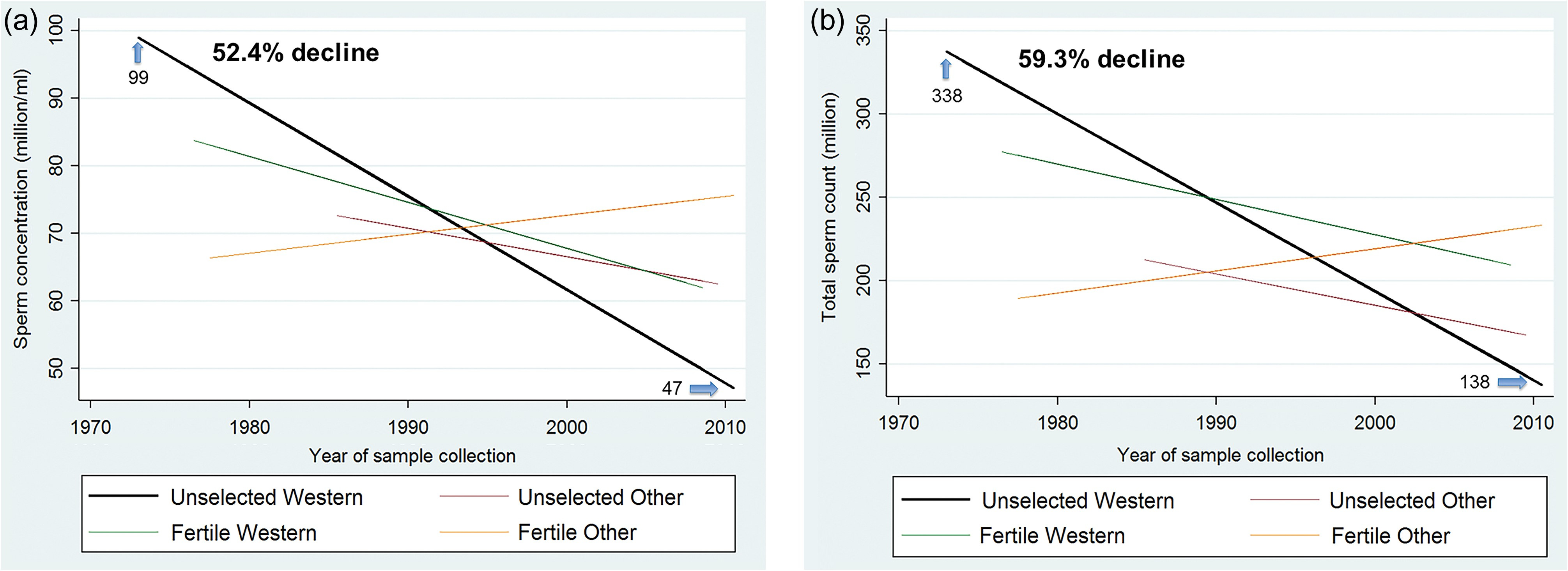
Endocrine-disrupting chemicals remain a concerning but unproven contributor. Phthalates seem to inhibit testosterone synthesis in Leydig cells, and NHANES data link urinary phthalate metabolites to decreased serum testosterone. The concomitant 52% decline in sperm concentration documented among Western men from 1973 to 2011 is consistent with widespread reproductive endocrine disruption, though population-level causation remains unproven.
The opioid epidemic and other medications may have created an under-recognized contributor. Opioid-induced androgen deficiency affects approximately 63% of male chronic opioid users. There is also limited but emerging data that other common medications (e.g., statins, SSRIs) may also be reducing testosterone levels.
Sleep deprivation at a population level matters. CDC data show 35% of US adults sleep fewer than 7 hours, a proportion that has increased over recent decades. As discussed below, just one week of short sleep can reduce testosterone by 10 to 15%.
But the conversation around testosterone has grown far louder than the biology alone would justify. Specifically, social media has amplified this further. A 2026 study in Social Science and Medicine analyzed 46 high-reach Instagram and TikTok posts promoting testosterone tests and treatments. The accounts behind these posts had a combined audience of 6.8 million followers and generated more than 650,000 likes.
None of the posts cited scientific evidence. 85% were published by individuals rather than health organizations, 67% included direct purchase links, and 72% had financial ties to testosterone products.
Why Testosterone Actually Matters
When testosterone is pathologically low and causing symptoms, the consequences are real: reduced libido, erectile dysfunction, muscle loss, low bone density, depressive symptoms, and unexplained anemia. But the Endocrine Society’s clinical practice guideline is clear that a low number on a lab test is not the same as having a disease. Guidelines require both confirmed low levels and consistent symptoms before diagnosing hypogonadism, and routine screening of the general population is explicitly recommended against.
If you get tested, do it right under the supervision of a medical doctor.
![An approach for the diagnostic evaluation of adult men suspected of having T deficiency. *The lower limit of the normal total testosterone (TT) harmonized to the CDC standard in healthy nonobese young men is 264 ng/dL (9.2 nmol/L) (9); this limit could be used for TT assays that are CDC certified. For laboratories that are not CDC certified and do not participate in an accuracy-based quality control program, the reference range may vary considerably depending on the assay and reference population used. Using the lower limit of the range established in local laboratories may not accurately identify men with hypogonadism. #free testosterone (FT) should be measured by an equilibrium dialysis method or estimated from total testosterone, SHBG, and albumin using a formula that accurately reflects FT by equilibrium dialysis. A harmonized reference range for FT has not been established, so reference ranges may vary considerably depending on the specific equilibrium dialysis method or the algorithm used to calculate FT. Therefore, until a harmonized reference range is established, the lower limits established by the laboratory may be used. $Conditions in which measurement of FT concentration is recommended, including those conditions that alter SHBG levels, are listed in Table 3. **TT may also be high in some conditions in which SHBG levels are high, such as HIV disease or use of some anticonvulsants. @Potentially reversible functional causes of secondary hypogonadism are listed in Table 1. %If there is clinical indication of hypopituitarism or sella abnormality on imaging, evaluation of other pituitary hormones (e.g., free thyroxine, morning cortisol and ACTH stimulation test if clinical hypocortisolism is suspected) should be performed. ^Perform pituitary imaging (magnetic resonance imaging) to exclude pituitary and/or hypothalamic tumor or infiltrative disease when severe secondary hypogonadism [e.g., serum T < 150 ng/dL (5.2 nmol/L)], panhypopituitarism, persistent hyperprolactinemia, or symptoms or signs of tumor mass effect (such as new-onset headache, visual impairment, or visual field defect) are present. CT scan may be sufficient if macroadenoma is suspected or to assess parasellar bone involvement. FSH, follicle-stimulating hormone; LH, leutinizing hormone.](https://substackcdn.com/image/fetch/$s_!mIW8!,f_auto,q_auto:good,fl_progressive:steep/https%3A%2F%2Fsubstack-post-media.s3.amazonaws.com%2Fpublic%2Fimages%2Fd6948b97-a2e7-479c-8bac-3b669d0f7011_520x690.jpeg "An approach for the diagnostic evaluation of adult men suspected of having T deficiency. *The lower limit of the normal total testosterone (TT) harmonized to the CDC standard in healthy nonobese young men is 264 ng/dL (9.2 nmol/L) (9); this limit could be used for TT assays that are CDC certified. For laboratories that are not CDC certified and do not participate in an accuracy-based quality control program, the reference range may vary considerably depending on the assay and reference population used. Using the lower limit of the range established in local laboratories may not accurately identify men with hypogonadism. #free testosterone (FT) should be measured by an equilibrium dialysis method or estimated from total testosterone, SHBG, and albumin using a formula that accurately reflects FT by equilibrium dialysis. A harmonized reference range for FT has not been established, so reference ranges may vary considerably depending on the specific equilibrium dialysis method or the algorithm used to calculate FT. Therefore, until a harmonized reference range is established, the lower limits established by the laboratory may be used. $Conditions in which measurement of FT concentration is recommended, including those conditions that alter SHBG levels, are listed in Table 3. **TT may also be high in some conditions in which SHBG levels are high, such as HIV disease or use of some anticonvulsants. @Potentially reversible functional causes of secondary hypogonadism are listed in Table 1. %If there is clinical indication of hypopituitarism or sella abnormality on imaging, evaluation of other pituitary hormones (e.g., free thyroxine, morning cortisol and ACTH stimulation test if clinical hypocortisolism is suspected) should be performed. ^Perform pituitary imaging (magnetic resonance imaging) to exclude pituitary and/or hypothalamic tumor or infiltrative disease when severe secondary hypogonadism [e.g., serum T < 150 ng/dL (5.2 nmol/L)], panhypopituitarism, persistent hyperprolactinemia, or symptoms or signs of tumor mass effect (such as new-onset headache, visual impairment, or visual field defect) are present. CT scan may be sufficient if macroadenoma is suspected or to assess parasellar bone involvement. FSH, follicle-stimulating hormone; LH, leutinizing hormone.")
Testosterone does more than build muscle and drive libido. It also shapes mood, motivation, and perhaps even how honestly men behave.
Mood and Mental Health
A meta-analysis of 27 RCTs (1,890 men) found testosterone treatment significantly reduced depressive symptoms, with effects present even in men with normal baseline levels.
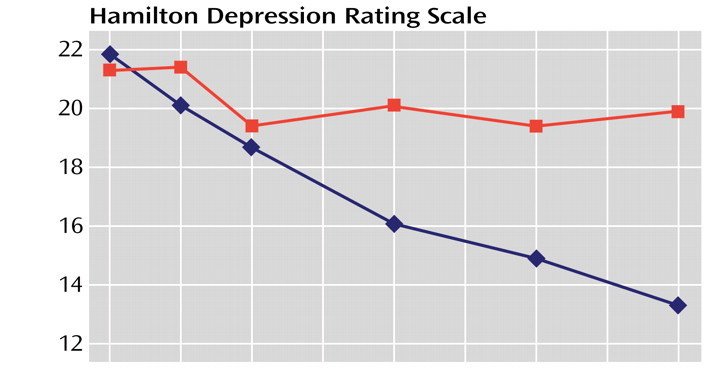
Men with treatment-resistant depression and low testosterone experienced significant improvement when testosterone gel was added to their existing antidepressant regimen.
Honest and Authentic Behavior
In an RCT of 192 men, a single dose of testosterone eliminated the usual ‘audience effect’ on prosocial behavior, eliminating strategic prosociality when watched and consistent with reduced submission to audience expectations.
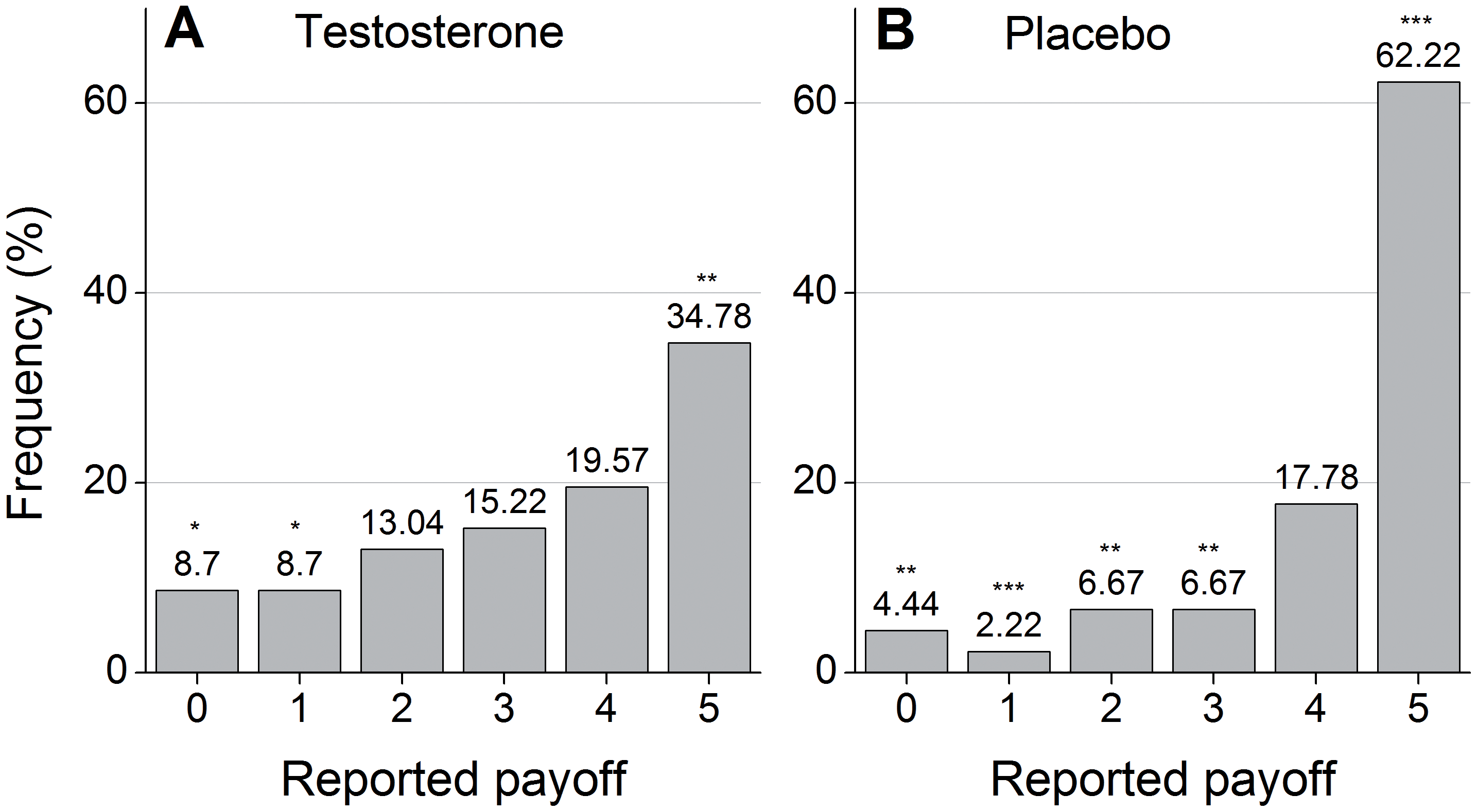
A separate double-blind RCT found testosterone administration significantly reduced lying for financial gain, potentially through effects on pride and self-image.